
Specializations
What We Can Help With
Mental health is our everyday, constant experience. We seek to support clients to bring awareness to their mental health and take steps towards wellness in a way that works for them. We welcome people of all backgrounds who are interested in developing this awareness and positive change. We encourage you to contact or visit us if you feel alone, misunderstood and nervous about mental health concerns.
Psychological Assessments

A psychological assessment is a structured, comprehensive, evidence-based method for psychologists to measure aspects of cognitive, behavioural and emotional functioning. It involves clinical interviews and questionnaires.
Our clinic is pleased to offer comprehensive psychological assessment services with Dr. Cedric Benning, PsyD, Registered Psychologist.
Depending on the referral question, an assessment may include a clinical interview, review of medical or educational records, standardized psychological testing, behavioural and symptom measures, and collateral information from family members, treatment providers, teachers, or other relevant sources. His approach is thorough, collaborative, and focused on translating complex clinical findings into clear, practical recommendations.
Dr. Benning offers assessments for adolescents and adults in the following areas:
Attention-Deficit/Hyperactivity Disorder (ADHD)
Learning, academic, and cognitive difficulties
Anxiety, depression, trauma, and post-traumatic stress
Personality and emotional functioning
Psychological functioning following a motor vehicle accident
Chronic pain and adjustment to injury or illness
Functional impairment and return-to-work planning
Disability and rehabilitation-related concerns
Diagnostic clarification and treatment planning
Self-referrals are accepted. To learn more about the assessment process, fees, current availability, or whether an assessment is appropriate for your needs, please contact the clinic to schedule an initial consultation.
Anxiety
Anxiety is a common occurrence that involves mental symptoms and physical symptoms such as:
feeling nervous, dread, on edge, or like something bad is about to happen
overthinking/worrying
difficulty concentrating
feeling down or depressed
feeling numb or stuck, in a freeze response
racing heart
difficulty breathing
headaches
restlessness
irritability
Sleeping too much or too little
Eating too much or too little
When anxiety takes over and interferes with daily activities, we may have a general anxiety disorder. Anxiety symptoms and disorders include, panic, social anxiety, and phobias. Anxiety can stem from biology and genetics, personality styles, stressful experiences (trauma, life transitions, relationship dynamics), medical conditions, and lifestyles.
Anxiety is often managed or treated successfully with different therapeutic techniques, such as mindfulness and lifestyle changes.
Anxiety Hack: “The Physiological Sigh” - the latest, most effect breathing trick where you take one big, deep breath in, then add an extra small breath in on top of that (to get all the air in), followed by a slow breath out. Repeat three times.
Depression
Depression is a common experience that involves mental and physical symptoms such as:
Feeling sad, down, depressed
Anxiety or feeling overwhelmed
Helplessness/Hopelessness
Feeling bad about yourself or that you have let others down in some way
Loss of interest or pleasure in what you previously enjoyed
Low energy
Low motivation
Self-isolation
Physical pains
Eating too much or too little
Sleeping too much or too little
When depression takes over and interferes with daily activities, we may have a depression disorder. Depression can stem from biology and genetics, personality styles, stressful experiences (trauma, life transitions, relationship dynamics), and physical health conditions.
Depression is often managed or treated successfully with different therapeutic techniques, such as cognitive reframing and behavioural activation.
Depression Hack: Humour activates our relaxation response and improves our mood. Watch something funny or call someone who is sure to make you laugh.
Stress and Burnout
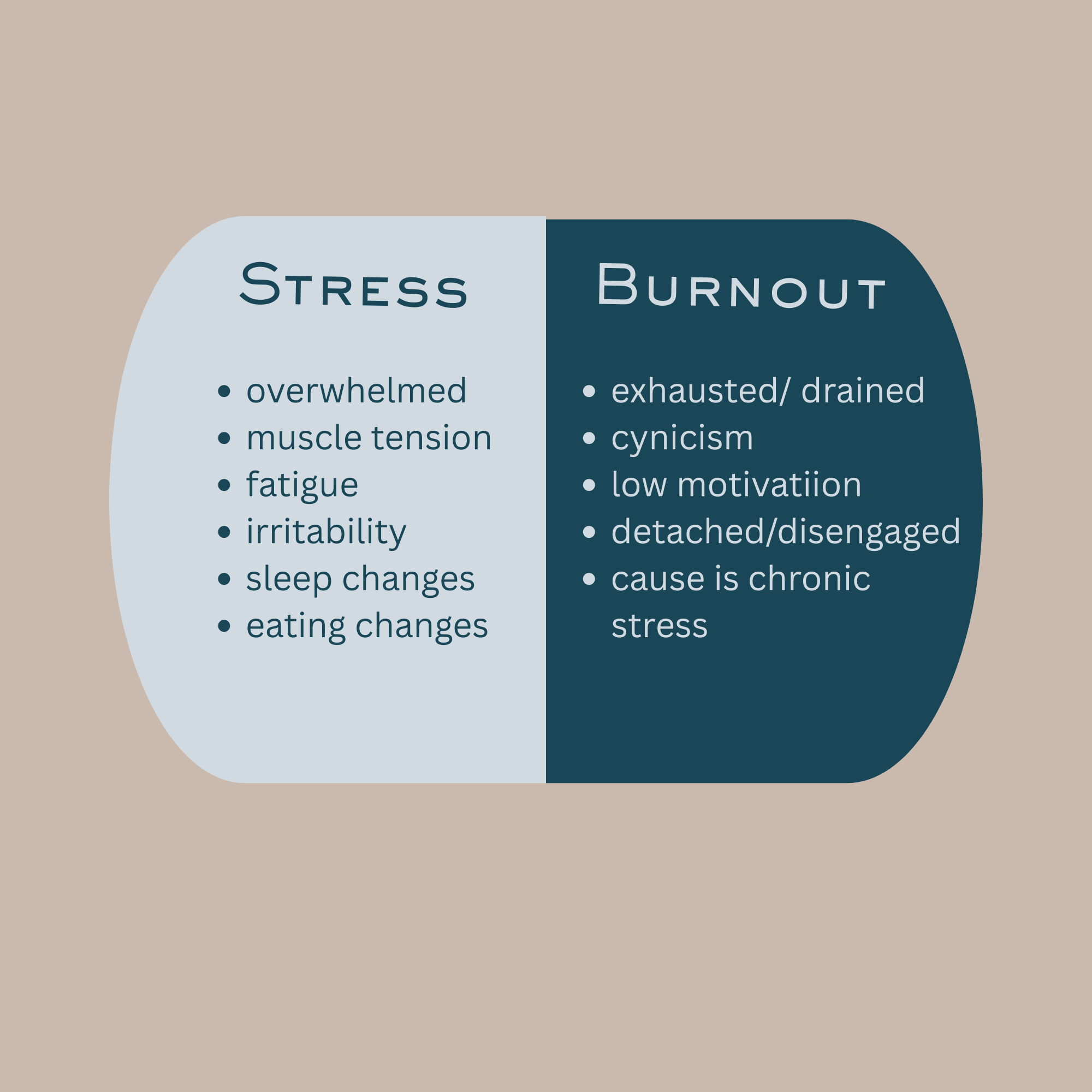
Specific life factors can lead to feelings of stress and a need to review coping mechanisms.
Chronic stress from the workplace, school, caregiving, and other life factors can cause burnout.
Processing stressors, adapting coping skills, and developing new coping can help combat symptoms of stress and burnout.
Stress and Burnout Tip: Prioritize tasks and schedule in time for self-care
Trauma / PTSD
Trauma involves experiencing a distressing event, leading to mental and physical symptoms such as:
Avoiding people, places and things related to the event
Intrusive thoughts of memories
Hypervigilance, feeling unsafe
Hyperarousal
Feeling sad, down, depressed
Hypervigilance, fear of something bad happening again
Being unable to concentrate or make decisions
Low energy and motivation
Trouble sleeping, nightmares
Physical pains
Trauma is often managed or treated successfully with different therapeutic techniques, such as developing feelings of safety and exposure therapy.
Trauma coping tip: Read about common trauma symptoms to validate your experiences.
ADHD and
Neurobehavioural Disorders
Attention-Deficit/Hyperactive Disorder (ADHD) is neurobehavioural disorder with key symptoms of:
Inattention
Hyperactivity
Impulsiveness
Neurobehavioural disorders refers to conditions caused by brain impairments or injuries. Common conditions are:
Dementia
Autism
Obsessive-Compulsive Disorder (OCD)
Tourette’s Syndrome
Treatment for neurobehavioural disorders will vary but often consists of psychoeducation to support understanding of symptoms and cognitive-behavioural therapy for management of thoughts and actions.
Mental Health Tip: Allow for family/community support. This can look like enjoying an activity together to communicating about your symptoms and needs to attending counselling together.
Suicide Ideation and Self-Harm
Suicide ideation can be passive or active. Passive ideation involves wishing for death and active ideation involves planning one’s death. Self-harm involves non-suicidal harm to oneself that causes physical damage.
Thinking of suicide and acting on self-harm are methods of escaping overwhelming situations and emotions. However, there are a million ways to cope that do not involve hurting oneself. It is also important to note that difficult emotions pass with time. Through counselling, clients can build safety plans and learn harm reduction coping strategies to manage overwhelming experiences.
Canadian Suicide Crisis Line: 9-8-8
Alberta Distress Line: 2-1-1
Call 9-1-1 if you or someone else is at risk of serious injury or suicide.
Mental health tip: Remember that emotions pass. Emotions only last 90 seconds without overthinking and storytelling.
Grief and Loss

Grief and loss can result in complex emotional experiences and include symptoms of:
Shock
Fatigue
Brain Fog
Anxiety
Lonlieness
Anger
Mixed emotions
Avoidance of thoughts and feelings
Sleep changes
Weight loss or gain
Grief is often aggravated by secondary losses that go unnamed.
Counselling can support grief through psychoeducation and supporting meaning making.
Grief tip: Remember there is no right or wrong way to grieve. We all grieve differently based on our personal experiences with the loss.
Relationship Concerns
We are social creatures but relationships are full of complex dynamics. Counselling can help with different relationships such as:
Couples
Families
Siblings
Parenting
Friendships
School relationships
Work relationships
Community dynamics
We often have a few relationships that are difficult to navigate. Counselling can help through:
Awareness of relationship experiences
Development of assertive communication
Understanding of relationship needs, including boundaries
Navigating life transitions
Rebuilding closeness
Recovery from leaving toxic relationships
Mental health tip: Take time to reflect on which relationships you may need to put more or less effort into.
Chronic Pain
Physical pain that lasts for three months or more is considered chronic pain. Such pain often involves psychological experiences. This doesn’t mean the pain is in your head, but that the mind and body interact, so physical pain often causes mental health symptoms, and vice versa. Consider that your muscles will tense up in pain, which can lead to feelings of stress and anxiety. Chronic pain can limit our activities resulting in feeling down and isolation.
Counselling can help with chronic pain symptoms through processing emotions and developing coping tools such as relaxation and cognitive defusion techniques.
Chronic pain tip: The gate control theory of pain theorizes that positive distractions, relaxation and mindfulness can help “block” pain signals from reaching the brain.
Life Transitions/Personal Growth

Life transitions, whether positive or difficult, anticipated or unanticipated, can cause stress.
Examples of transitions to discuss in therapy are:
Milestones: graduating, getting married, having children, retirement, etc.
School and professional changes
Moving/relocating
Divorce
Health events
Counselling can help recognize primary and secondary changes, cope with adjustments, plan lifestyle changes, reflect on identity shifts, and recognize values to prioritize in the present.
Coping tip: Transitions can feel out of our control. Focus on short term goals/tasks that are more in your control.